|
Bluebell
and Wonder
Hello children,
This is wonder
mouse again. How did you manage with the
questions Bluebell and I asked last
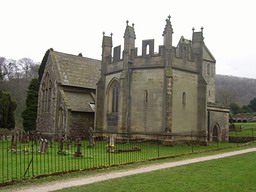
month? Once again we visited your church
and when I went home I found that my
grandad Moses was visiting us. I love it
when he visits because we all sit around
the fire with a mug of cocoa and he
tells us stories about when he was a
young church mouse.
Grandad asked: "
When you enter the church do you remove
your hat?" Do you know why young men
should remove their hats in church?
I told Grandad
about the people on the screen. He told
me that they are Icons (pictures of
saints).
Can you tell me
who is the Holy Lady at the left side of
the arch on the screen and who is her
Beloved Son on the right of the arch?
Bluebell and
Wonder love to play in the fields among
the oats, barley, hay and flowers. They
both try to do at least one good deed to
help mummy and daddy.
Bluebell asks:
What good deed have you done?
Can you tell
Bluebell what your Icon corner is like?
Can you draw it and explain what your
Icon corner is for?
We must go
now. It is time for our bath and Grandad
Moses has promised to read bible stories
to us. If you need a book to write your
answers in, ask Veronica or Winifrede.
Bluebell & Wonder
Learning from Children with Learning
Difficulties:
Teaching ‘our Truth’ as ‘a truth’
I was
recently given an assignment which was
extremely challenging. For those of you
who don’t know, I work in the field of
Education, specifically Special
Educational Needs: a large discipline
comprising the Learning Difficulties
spectrum as well as challenging
behaviour, even including children who
are incarcerated or in a therapeutic
environment. My challenges usually come
in the form of especially insulting and
violent behaviour, but in this case it
was just the opposite. It was decided
that I was ideally suited to teach R.E.
for half a day to a P.M.L.D. class, age
range four to thirteen. Now allow me to
explain just why no one wanted this
particular assignment: P.M.L.D. stands
for Profound and Multiple Learning
Difficulties. These kids are great but
are truly unfortunate in many ways. They
have no productive or receptive
language, around half have no eyesight
and almost all are life-curtailed. Now
normally this is perhaps one of my
favourite classes to teach; I enjoy the
challenge of trying to reach each of
them with the limited channels of
communication which we have. Perhaps now
you are starting to see the unique
nature of the challenge: Just how could
I teach a Religious Education slot where
not one of the children was able to
conceive of such an abstraction as God?
And just to make it more interesting,
this two and a half hour session was to
take place with the participation of the
school’s potential intake, all of whom
were accompanied by parents and carers.
And so I was representing the school.
Finally, around a third of the
children’s parents were from an Islamic
cultural background, so I would have to
be extra sensitive to their perspective
and wishes.
Normally, the best approach is to do as
follows: simplify, make it fun, repeat
often, make sure that you create an
experience which is accessible to the
sensory channels available and invite
preference or participation wherever
possible. Then, I got some inspiration.
Where had I seen the concepts ‘religion’
and ‘sensory’ brought together before?
Of course! In just about every Divine
Liturgy I had ever attended. Bingo! Now
I could not take them to a Liturgy, nor
could I take a Liturgy to them, but I
could certainly show them some of the
aspects of our liturgical practice. And
so, on the Tuesday in question, there I
am in front of forty or more people. Our
Object of Reference is a large Holy
Icon, and we play the Rachmaninov
Vespers for the non-sighted. I chose an
Icon of Christmas for two reasons: it
was a large Icon of a familiar feast and
it was easy to interpret for the
parents, staff and carers present. Our
first task was to light a candle and,
with help, stick it in a large sand
tray. I was aware, of course, that at
the end of this activity I would have 40
naked flames, but all went off without
incident and our sighted students
enjoyed watching the light growing
bigger and, where possible, safely
feeling the heat. Next up: incense. The
olfactory sense is perhaps the most
powerful in terms of its effect on
emotion and memory and all students
responded to the pungent and evocative
Rose incense which I had chosen. I
rounded off with an explanation for the
adults of how incense is used by all
Orthodox since historically it has
always been offered to God and I
described its Liturgical use. My
functionalist interpretation that
incense was actually a precursor to
antiperspirant created some hilarity.
It was all going too well. I had an LSA
standing by with 999 tapped into her
‘phone to call the fire brigade and was
half expecting casualties, but the steps
we had taken to ensure safety were
working. The next activity was
introduced to guarantee the inclusion of
everyone in our class, even the children
who were profoundly neurologically
impaired. I started by explaining what
Holy Water was and proceeded to tip half
a litre or so into a spray bottle. All
students responded to the Holy Water
mist, since it involves a quite sudden
change in texture. The last two tasks
required cultural sensitivity: Making
the Sign of the Cross and receiving a
dab (or Cross) of Holy Oil. Since most
P.M.L.D. children have regular
physiotherapy and have very stiff limbs,
the Cross-making was good exercise too.
Having a dab of oil brushed onto their
palms, for some reason, created the most
interest. It could have been to do with
texture, smell or something else, but we
noted that this last activity sparked
the biggest reaction. I used the last
ten minutes in case anyone had a
question and, to my great surprise,
staff and parents alike asked me a
series of questions which were both
considered and profound. A mother asked
me what issues separate Orthodox
theology from its Western counterparts,
I was asked what constitutes a Saint and
how we know that God approves of a
particular person’s life. We even
discussed how my painting the sign of
the Cross onto a Muslim child’s hand
would probably have been the wrong thing
to do. Finally, and I was bowled over by
this, I had a couple of parents and one
staff member who asked to be anointed
with oil! More than I could have
expected in an age where religion is,
according to some, the last taboo.
And me? I never thought that I’d say
this but I was happy to have been
challenged. It is rare that we get the
chance to apply the tenets and practices
of our faith so directly. I realised
that on this level, the level of our
senses, somehow, both adults and
students were able to participate in a
way which is uncluttered with
theological concepts. All children with
learning difficulties, although they are
impaired at the cognitive level, respond
to mood and are especially canny and
perceptive when it comes to the social
world or reIating to other people or
subtle changes in their environment.
Christ’s words ‘Unless you become as
little children’ had never been as real
for me. It struck me that, for all our
so-called ‘higher’ faculties continually
whirring and conceiving, we actually
relate to God in a very simple,
intuitive level or via the Nous as some
of the Fathers of the Church would have
it. When you think about it, just how
would you describe, say, the change in
us which we have all experienced on
receiving Holy Communion? Words fail to
adequately conceive of this experiential
change. I ended with a request to the
adults present. I was standing on the
line between presenting Orthodox
practice as one of many valid cultures
and presenting our Truth as The truth. I
asked that they try not to view, where
possible, what they had seen as an
isolated cultural practice, as though it
were under glass box at a museum, but
instead that they see each practice and
sacramental gesture as living and
dynamic; as ways by which God can reach
us if we so wish.
Simon Stone
|